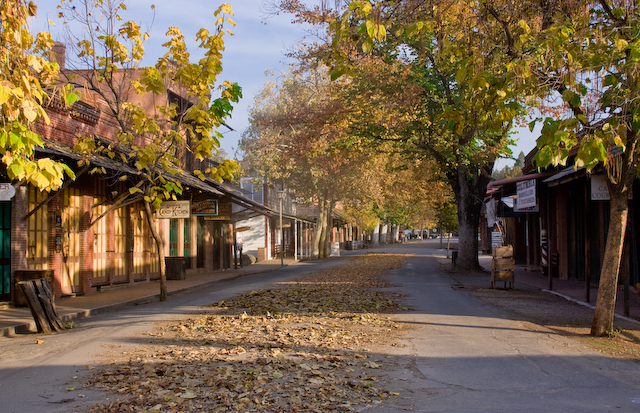
Columbia
Columbia was the 'Gem of the Southern Mines'—at peak, one of California's largest cities with 25,000
State: California
County: Tuolumne County
Founded: March 27, 1850
Peak Population: 25,000-30,000
Columbia was the 'Gem of the Southern Mines'—at peak, one of California's largest cities with 25,000-30,000 residents. It produced $87-150 million in gold, some financing the Civil War. Fires in 1854 and 1857 led to brick reconstruction, preserving buildings. Now California's first preserved historic town.
Timeline
- March 27, 1850 - Discovery Dr. Thaddeus Hildreth's party discovered gold, initially calling it 'Hildreth's Diggings.'
- 1852-1853 - Peak Population Columbia reached 25,000-30,000 residents, becoming one of California's largest cities. Gold output averaged $100,000/week.
- 1854, 1857 - Great Fires Devastating fires destroyed wooden buildings. Rebuilding with brick and iron shutters preserved structures that still stand.
- 1860s-1870s - Decline Easily accessible gold diminished. Miners tore down vacant buildings to search for gold beneath them.
- 1928 - Olmsted Survey Frederick Law Olmsted Jr. recommended Columbia as one of the best-preserved gold mining towns.
- July 15, 1945 - State Park Created Governor Earl Warren signed the bill creating Columbia State Historic Park—California's first preserved historic town.
Plan Your Visit
Best Time: Spring or fall
Difficulty: Easy - developed state park
Time Needed: Half day to full day
Tips
- Costumed docents bring history to life
- Gold panning available
- Stagecoach rides operate seasonally
- Nearly 30 Gold Rush-era buildings preserved
Quick Facts
- Gold from Columbia helped finance the Union Army during the Civil War
- At peak, Columbia was larger than most modern California cities
- Miners tore down vacant buildings to search for gold beneath foundations
- California's first preserved historic town under public control
Location
Address: Main Street, Columbia, California
Coordinates: 38.0364, -120.4011